Wednesday, January 9, 2013

Our No. 1 Enemy: Added Sugar

The beginning of a new calendar year is a time when many of us are more receptive to embracing opportunities and challenges that may be a little out of our comfort zones.

That’s why today I intend to strike while that iron is hot!

When people ask me what’s the thing they need to do or change first in their diet, my answer isn’t giving up dairy or meat … it’s eliminating added sugar (as opposed to naturally-occurring sugars like those found in fruits, vegetables and whole grains) and processed food.

All those boxes staring at us from the shelves in supermarkets that promise everything from weight loss to energy are lying -- just read the list of ingredients, one more unhealthful than the other and many we can’t even pronounce much less find on our own in a supermarket (because they don’t exist there, only in factories).

And I have to hand it to the marketers, they’ve become more and more creative masking the word “sugar” by using words that many of us overlook such as: cane juice crystals, cane sugar, caramel, corn syrup, corn syrup solids, carob syrup, dextran, dextrose, fructose, galactose, high fructose corn syrup, honey, juice concentrate, lactose, maltodextrin, maltose, malt syrup, molasses, natural sweeteners, sorbitol, sucrose and treacle.

And these are only a few. (A good rule of thumb is to look for any words ending in -ose.)

Oh and artificial sweeteners aren’t any better. In fact, recent studies suggest they are worse.

In his book Food Rules, author Michael Pollan offers excellent advice on how to make the right choices:

“Shop the periphery of a supermarket.”

That’s where you’ll find whole-food. Avoid the “dreaded center aisles, where processed foods predominate. Stick to the edges, where the meat, dairy, produce and fish are pretty much as they started out.”

I know what some of you may be thinking, “A little bit of sugar never hurt anyone.”

But that’s just it -- we’re no longer talking about “a little bit of sugar.” We’re beyond a little bit. Sugar is in everything -- our breads, yogurt, cold cereals, hot cereals, ketchup, peanut butter, apple sauce, fruit drinks, soups, tomato sauces, etc. etc. etc.

It’s also addictive, just like alcohol and nicotine. Food manufacturers know this so they add more to everything to hook us. And when we're promised low-fat snacks, take a look at the sugar content. It’s been increased to make up for the fat that's been removed. It’s deception at its finest.

Case in point, it’s no secret that I love Starbucks pumpkin spice soy lattes. In fact, in the past I have enjoyed a "tall" almost daily. No big deal, right? I work out. I eat healthy. This is my "sweet treat."

Well that sweet treat contains 39 grams of sugar (or about 8 teaspoons) -- and that’s without whipped cream. Let's put that in perspective -- according to the American Heart Association, women should limit added sugars to approximately 6 teaspoons, while men should take in no more than 9 teaspoons a day. I'm over that daily allowance with one 12-ounce drink! (I want to note that the doctors and health advocates that Matt and I follow suggest that ZERO added sugar be the ultimate goal.) 

I drank my last soy latte on Jan. 1, 2013.

Very recently, I bumped into a gal at Wegmans. She asked me about Coconut Sugar (new to me at the time) and its health benefits. I didn’t have any information on it. When I went home, I sent a note to a well-renowned chef in California to inquire about it. This was her response:

“Just because something is less bad doesn’t make it good. When it comes to sweeteners, use the fruit, the whole fruit and nothing but the fruit.” (Sorry Agave!)

In a 60 Minutes segment, Dr. Sanjay Gupta reports on new research showing that beyond weight gain, sugar can take a serious toll on our health, worsening conditions ranging from heart disease to cancer. The research of Dr. Robert Lustig, UCSF Professor of Pediatrics in the Division of Endocrinology, is highlighted. Watch the video below.

Lustig is well-known for his YouTube presentation titled, Sugar: The Bitter Truth, which explores the damage caused by sugary foods. He argues that fructose (too much) and fiber (not enough) appear to be cornerstones of the obesity epidemic through their effects on insulin. Click here to view.

For more information, Gupta is also featured in 60 Minutes Overtime in the segment, Sugar and Kids: The Toxic Truth. Watch it here.

I assure you, all three videos are time well spent.


Lean more about whole-food eating. LIKE us on Facebook.


You can also read Dr. Lustig's book Fat Chance: Beating the Odds Against Sugar, Processed Food, Obesity and Disease.

A cool pic I found online that visually shows the
amount of sugar in some of our more common soft drinks.
Frightening!

Tuesday, January 8, 2013

My Road to Veganism Continues

"The first problem for all of us, men and women, is not to learn but to unlearn."
Gloria Steinem

(Part II of II. Part I available here.)


It’s August 2010. I’ve given up land animals and have reduced my dairy intake, but I’m still consuming fish (once/twice per week) and eggs.

I’ve been turned on to the book Skinny Bitch in the unlikeliest of places … a local Starbucks. It is there that I meet “the vegan,” a woman who I recognize from my gym but do not know personally. She and I exchange numbers and meet up at Starbucks one evening not more than a week later.

I am immediately floored that she chooses soy milk in place of cow’s milk. This woman is outrageously radical (if not a little nutty) is what I’m thinking. At this point I can’t imagine a life without a 16-ounce, one shot, iced skim milk latte.

We start chatting about everything from working out at the YMCA and running (which I don’t do at this point, though she does) to kids and religion. (She’s a Christian, which interests me even though I’m agnostic. I love taboo subjects like sex, politics and religion; and when you can find the right person who has steadfast beliefs but is also open-minded, that’s the jackpot. She was both those things.)

Eventually the subject moves to veganism and she is all too eager to give me all the ins and outs, including her story about what prompted her to become a veg-head. She suggests I continue my research to see if it’s right for me. She wasn’t preachy at all, just very forthcoming with information. I don’t think she had a vested interest in whether or not I followed her lead. Why would she? It seemed like she just wanted to get to know me as I wanted to get to know her.

So I have Skinny Bitch in hand and “the vegan” on my brain. My family and I leave for vacation. I read thru the book in a day. It’s a very easy read. It’s also mildly amusing, with more than a fair share of curse words thrown in for effect. If you’re easily offended, don’t buy this book. It could have been written by Sergeant Foley on speed (ala An Officer and a Gentleman).

I’m more convinced than ever that a whole-food, plant-based diet is essential to a healthy life. In fact, I suggest to Matt that he read Skinny Bastard (which he does). I’m still struggling, though, with the possibility of never having a slice of cheese pizza or a skim milk latte again. In my mind, I am totally cool with reducing dairy but eliminating it seems so drastic. And what would I eat when we go out for breakfast if I gave up eggs?

I give it a shot on vacation and fail day one, breaking down at the first Starbucks sighting. I decide to minimize dairy and eggs. Pollan likes moderation. He’s OK with dairy. Flexitarian feels right. I guess I won’t be a Skinny Bitch after all.

It's early fall. I’m waiting in line at Wegmans. I see Soap Opera Digest staring at me so I pick it up and begin skimming through it to see what I may have missed in Port Charles. I come across an interview with a General Hospital actress who talks about having been able to reverse her carcinoid cancer through a vegan diet, defying doctors’ predictions that she would be dead in 2-5 years. She accredits T. Colin Campbell’s The China Study with giving her the knowledge and the resources to do it. “The China Study? Where have I heard that,” is what I’m thinking. Then it hits me -- it was referenced in Skinny Bitch.

I buy the book. Let me tell you it’s intimidating. Flipping through the pages made me feel like I needed a PhD to understand it. Fortunately, it wasn’t as bad as I thought (though his work is now condensed in a 90-minute film called Forks Over Knives, which I recommend over the book. See the trailer below.)


In the simplest terms, drawing on the findings of decades of research in rural China, Campbell details the connection between nutrition and heart disease, diabetes and cancer.

The New York Times has recognized the study as the “Grand Prix of epidemiology” and the “most comprehensive large study ever undertaken of the relationship between diet and the risk of developing disease.”

At this point, I know where I’m going to end up. I just haven’t determined when my move is taking place. Matt’s read Skinny Bastard, watched Food Inc. and has listened to me go on and on about The China Study. He buys into the research but thinks transitioning to a vegan diet is extreme, so not a lot of support at home.

Everything changes on New Year’s Day ... Jan. 1, 2011.

Matt and I wake up and for several reasons realize that our marriage isn’t working. We’re disconnected from one another and unhappy together. We have two choices before us -- do things differently or continue living unhappily.

Fortunately, we choose the former. But our journey to fixing what ails us isn’t going to be about merely surviving. We have to end up thriving as a couple, something I don’t think we ever did in the past. We start aggressive counseling and establish an immediate connection and closeness. If it’s a sign of what’s to come, we’re in for a lifetime of awesomeness!

I start running early in the New Year. It helps me as we work to rebuild our marriage. Shortly thereafter, a gal pal asks if I would consider running a half marathon. I decide in the moment that this would be a good thing for me. I share my plan with Matt who encourages me to do it and volunteers to train with me (unlike me, Matt has always been an on and off runner). This is great for two reasons: 1) It ramps up our one-on-one time in a very healthy way, and 2) It gets me ready for my first half. With the exception of when I ran to my car following a screening of the movie Scream, which I saw by myself, I had never really run prior to that time so I needed all the support I could get.

He also says he’s been thinking more and more about our health and suggests we transition to a vegan lifestyle. I’m shocked, but ready and very eager. For me, it’s giving up what little dairy and eggs I’m consuming and fish once/twice a week. For him, he needs to go Full Monty. He’s game, if we can still eat sushi once a week (something we enjoy doing together). I agree.

And that’s how it all began.

We give up fish altogether in June 2011. In terms of meat/fish, we’ve never looked back -- not once. I don’t cook with dairy or eggs, nor do we order either off a menu.

I describe us as being “almost vegan,” because we don’t quiz the wait staff at restaurants for the list of ingredients in breads or pastas, for example. If an item is prepared in butter or cream, we ask to have it removed. If it can’t be modified, we choose something else. And in the spirit of total transparency, every once in a while we may grab a non-vegan cookie or slice of birthday cake at a party.

We live an amazingly satisfying vegan life together, thanks to the pioneers who have come before us, giving us delicious recipes that would rival any meat- and dairy-based dish, dairy-free products that we can buy easily in most supermarkets, etc.

Vegan and vegetarian options are also popping up on menus across the country. It’s an easy lifestyle to adopt and enjoy and it’s becoming more and more mainstream. Dare I write it’s actually a better lifestyle than the one we left behind (it is).

What’s more, we’re happier eating like we love ourselves. It’s not only fantastic for us physically, but also mentally and emotionally. Our only regret is not doing this sooner. But you can’t change yesterday. For us, it’s all about today and tomorrow.

When people imply (rather, state outright) that living vegan is too difficult, I suggest they pick up Pollan’s In Defense of Food. His message “Eat food. Not too much. Mostly plants.” will help you achieve optimum health. The typical Western diet will not. And as I shared in yesterday’s post, vegans and vegetarians don’t possess any greater health benefits than true flexitarians.

For us, we preferred the vegan way of life. Our taste buds reawakened (it's true). We didn’t miss meat or dairy. Our food was more creative and tasted better. We began cooking with foods, spices and herbs that had largely been absent in our former diet. It was a natural progression for us to just say, “We don’t want to eat these foods anymore.”

When we first became vegan we wanted to convert friends and family. In a sense it was like a Born-Again Christian finding God. We felt like we had the very simple answer to many of the health and dietary issues plaguing those we loved. While we had good intentions, looking back we were also incredibly annoying. Today we try to be more like my friend “the vegan” (though when you see people you love struggling, it can be ridiculously challenging to look away). If you want to know about veganism or how we eat or what challenges we face, we’ll answer all your questions. But we’re not actively looking to change anyone. Your diet is your diet -- for better or worse. That's our mantra at least for 2013 and we're going to try to live it.

And about that sushi -- we still enjoy date nights at Sogo and other Japanese restaurants. We simply order vegetable rolls now. We also recently took a Vegan Sushi Class at The Natural Gourmet Institute in New York City to learn how to make rolls at home.

Our learning never ends, nor should yours. Keep an open mind.


Lean more about plant-strong eating. LIKE us on Facebook.


Monday, January 7, 2013

Kellie, why did you go vegan?

That’s the No. 1 question I hear from friends and family. A few people even like to remind me that I could “lose weight” eating meat and dairy. But here’s the thing -- my switch to a whole-food, plant-based diet had nothing to do with losing weight (I was already quite thin) and everything to do with preventing disease and trying to correct years of unhealthful eating and other bad habits.

For me, becoming a “healthful” vegan (I use the word “healthful” for a reason -- many vegans abstain from meat and dairy but aren’t healthy, choosing to fill their plates with processed foods and sugar in place of animal protein) happened in phases beginning in 2010.

In an earlier post, I wrote “We All Start at the Mailbox,” which touched on what my life was like prior to May 2010 -- a closet smoker with very poor eating habits, who more often than not skipped breakfast and lunch, overindulged on a typical American dinner and then stuffed my face with night-time snacks. My favorite? Nachos with melted cheese, olives and salsa.

I also drank about six cans of Dr. Pepper a day -- that alone translates into 900 calories and 240 grams of sugar. What on earth was I thinking!

I weighed about 35 pounds more than I do today. Fortunately, because of my height, I was able to avoid looking as unhealthy as I really was. When you’re 5’9, the weight has plenty of places to hang out.

Soon after turning 40 in November 2009, I began questioning my own mortality. I started to think about the diseases in my family (and Matt’s, particularly since his dad died of pancreatic cancer at the young age of 56), and how more and more middle-aged people that I knew (some related to me) were beginning to take or were already taking prescription medications to regulate their cholesterol, blood pressure, diabetes, etc. I didn’t want to live that like.

What pushed me over the edge was my daughter Sienna. One day on our way to pre-school, she burst into tears and said she didn’t want me to die. I reassured her that I wasn’t going anywhere but the moment stayed with me -- it haunted me. My father’s lifestyle took him from us earlier than what should have been, cheating us and his grandchildren out of time with him. I didn’t want my kids to experience that with me if I could help it. On May 24, 2010 I changed the game.

I joined Jenny Craig and started working out six days a week. The weight poured off and I was feeling good. My obsessive personality dominated more and more and I began immersing myself in books on nutrition.

Michael Pollan’s In Defense of Food profoundly changed the way I viewed food. Unlike any diet I had learned about previously, his simple message supported by years of research made sense, “Eat food. Not too much. Mostly plants.”

Pollan wrote about the many problems in the food industry -- like how what we eat is no longer the product of nature but of food science. He also reminded me that the primary reason we eat is to maintain health. As a country it seems we continue moving further and further away from that basic premise.

Pollan advocates flexitarianism -- reducing *meat and fish consumption to just 2-3 servings per week, eliminating or significantly reducing processed food and increasing our intake of fruits, vegetables and whole grains. 

Here's what a flexitarian lifestyle looks like:

3 (meals per day) X 7 (number of days in a week) = 21 (meals).

Pollan recommends that meat be included in just two or three of those 21 dishes. Why? I'll let Pollan answer.

“The more meat there is in your diet -- red meat in particular -- the greater your risk for heart disease and cancer. Why? It could possibly be its saturated fat, or its specific type of protein, or the simple fact that all meat is pushing plants off the plate. We should treat meat as a side dish or flavoring to be used sparingly.

Pollan's flexitarian approach allows people to adopt a near-vegetarian diet without having to give up turkey on Thanksgiving Day or grandma’s favorite pot roast on Sundays. Plus, his research shows that vegetarians and vegans don’t enjoy any greater health benefits than true flexitarians (again, that's eating *meat/fish just 2-3 servings per week).

He’s also a proponent of shopping locally (at farms versus supermarkets) for produce and meat. Now when I suggest the latter to people, they remind me that meat from farms is costly. But that's the idea -- buy higher quality meat, free of antibiotics and hormones, and eat less of it. Another Pollan’ism, “Pay your grocer today or your doctor tomorrow.”

In my mind this was the "AHA" moment of my lifetime. If the food we eat fuels good health, why would it not be directly, if not primarily responsible for disease and death? For years, I heard that genetics are responsible for most everything that ails us in life. But what if it’s our lifestyle that’s triggering those genetic traits and what if through a healthier dietary lifestyle we can prevent those genetics traits from ever occurring?

For me, sacrificing meat in favor of a more whole-food, plant-based diet was a no-brainer. I thought that even if Pollan was wrong, what would be the negative? There isn’t a doctor on the planet who would argue away the short- and long-term gains of eating more fruits and vegetables and less processed foods.

Pollan’s message was reinforced by the film Food Inc., a documentary that painted an unflattering picture of America's corporate controlled food industry. It left me reeling.

I could no longer ignore what I was learning in favor of grilled chicken or a filet mignon.

On July 31, I stopped eating land animals altogether and adopted a flexitarian approach to eating, which for me would include fish just once or twice per week. Dairy and eggs would still be a part of my diet.

My desire to learn continued to increase, however.

They say we meet people for a reason. I believe that to be true. My next book pick was a suggestion from a 20-something Starbucks barista -- Skinny Bitch by Rory Freedman and Kim Barnouin. Coincidentally, she recommended the book to me while waiting on another customer -- a woman who I recognized from my gym. She overheard our conversation and, as it turned out, shared with us that she was vegan. My fellow gym-goer and I began talking and exchanged numbers to get together for coffee in the near future.

Tune in tomorrow for Part II of my journey to a plant-empowered life! (Part II is now published. Click here.)


Lean more about plant-strong eating. LIKE us on Facebook.


 *Contrary to popular belief the word “meat” includes all meat -- yes chicken, turkey and fish too. I can’t tell you the number of people who believe “meat” refers only to red meat. Wrong, wrong, wrong!


Sunday, January 6, 2013

If at first you don’t succeed …

Try, try, try again.

Regardless of where you fall in the dietary lifestyle spectrum, I think we can all agree that mac and cheese, while a sought-after comfort food, is nothing more than fat and empty calories. I hate the fact that it often leads the choices on kids’ menus in restaurants, but that’s a post for another day.

For the past two years, I have tried repeatedly (and unsuccessfully) to “veganize” macaroni and cheese. My motivator was to turn out a “healthful” creation that would not only appeal to our children but one that would rival the traditional and fattening dairy version. I wanted to mimic a dish I knew they loved without feeling guilty that I was giving them food completely lacking in nutritional value.

I looked to well-renowned chefs in the vegan and vegetarian world for inspiration. My every attempt, while enjoyed by Matt and me, failed our kids’ taste test. And to be honest, the vegan versions were never particularly healthful. It seemed that many recipes looked to replace dairy with processed “soy” cheese and generous amounts of Earth Balance (vegan butter).

I kind of through my hands up and landed on the realization that there IS joy in life without mac and cheese. Until …

VegNews recently named its top 10 vegan recipes for 2012, with mac and cheese leading the list. What struck me, though, was how the online pub described it, “This is the best mac 'n' cheese on the planet. End of story.Talk about high praise.

I also loved that the recipe didn’t use vegan cheese or nutritional yeast, and also used a minimal amount of Earth Balance.

So what exactly made the cheesy sauce that all of us know and so many of us love?

You better take a seat …

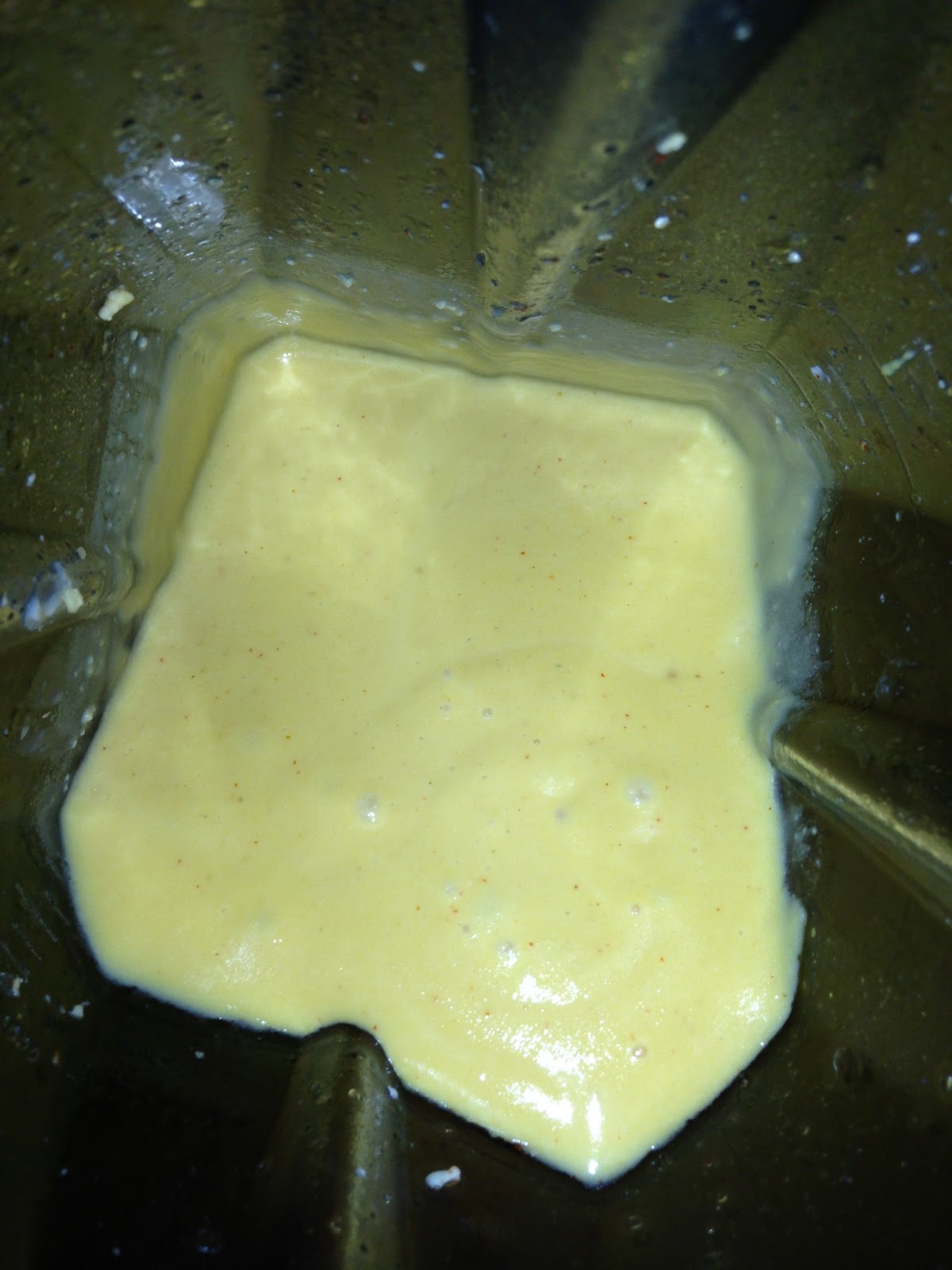
Carrots, potatoes, onions, Dijon mustard, lemon juice, cayenne pepper, paprika and cashews.

Yeah, way.

And you know what? It’s the best mac & cheese on the planet! I challenge anyone to show me a mac & cheese that is equally as good and as healthful as this. And boy did it pass our kids’ taste test -- so much so that I immediately called my sister to tell her I want to make it for her youngest son, who is lactose-intolerant and a very picky eater.

Seeing is believing, but tasting is proof. Make it tomorrow for Meatless Monday. You will be so happy you did!

Oh, heart rate training has been going great. This week I ran three, 60-minute runs, with each feeling stronger and stronger. (For those of you who may have missed my posts earlier this week, I took off the Sunday before Christmas thru New Year’s Day, resuming exercise just this past Wednesday).

I absolutely love training with the heart monitor. I have completely checked my ego at the door and am convinced that running slower today to run faster tomorrow is the only approach for us. Heart rate charts exist on every cardio machine for a reason. I am looking forward to seeing (and sharing) our results over the coming weeks. Matt will also be back later this week with a guest blog on the topic!

BTW, I plan to run six, 60-minute runs this week. That’s the goal!


Here's the recipe. *I increased the diced carrots from 1/4 cup to just under a 1/2 cup. I used Whole Wheat Panko Bread Crumbs instead of my own with the added butter. I used a full box of multigrain macaroni (versus 8 ounces) (I want this to last a couple dinners). I also cut the Earth Balance down by 1-2 tablespoons (versus 1/3 cup).

Thursday, January 3, 2013

In Memory of Spence

I had intended to share with you tonight a story about my first professional interaction regarding my blog and also tell you about a very good soup that I “veganized” all on my own. But both topics seem insignificant now, having been overshadowed by the passing of a gym friend.

“Spence,” as he was known to all of us at the YMCA, lost his valiant fight against cancer this morning. The last time I saw him was the Saturday before Christmas. He was doing what he loved and what he did just about every day -- working out. I know we exchanged pleasantries yet I’m sitting here trying to remember if I had wished him a Merry Christmas before I left. I don’t think I did, probably because I assumed I’d see him again before the holiday. Sadly, that would be the last time I would see Spence alive.

I knew his cancer had returned and that he was undergoing treatments since just before the start of summer. From what I understand, the past couple of months had been filled with ups and downs, yet recently he had been at the gym pretty steadily. I think we were all feeling more hopeful that he would find himself in remission once again.

When I saw him on Saturday, he was in good spirits, had a smile for absolutely everyone and was working the elliptical like a man who didn’t have an illness at all. I think that’s why his death has come as such a surprise.

Everyone at the Y had immense admiration for him and for the courageous way he fought to beat the disease that had been ravaging his body.

Spence, you had the strength of a lion and the gentleness of a lamb. You were a good man -- you were admired -- you were loved -- and you will be missed. Rest in peace, friend.


Wednesday, January 2, 2013

Frustratingly Fantastic!

That’s how I would describe my first real heart rate run this morning.

In yesterday’s post, I showed a photo of my new heart rate watch. The piece I didn’t show is a sensor that straps around my chest, just under my breasts. This is the part that does all the work because it’s what transmits accurate ECG-readings to my wrist monitor (or watch). One last note, on the sensor there’s a 6-inch strip of electrodes that need to be moistened before strapping around my chest. That’s important. If it isn’t moistened enough, the monitor will not work correctly.

OK. So I’m moistened, strapped and ready to rock-n-roll.

I take off at 4.7 MPH (based on research, I’m pretty confident that I’m looking at an 11+ minute mile to start with this type of training). As soon as I begin to run, my heart rate (according to the watch) shoots up to 182. I know immediately that it can’t be right, so I stop to call Matt to see if he can troubleshoot. He agrees that something’s off. He suggests I moisten the sensor strap a bit more. Off to the ladies room I go. I come back, start the treadmill and begin running at 4.7. I settle in for about 2 minutes when my phone rings. It’s Shawnee Elementary and Ryan is having an asthma attack. I need to leave immediately to bring him his puffers.

At this point, I know the gym is history for today (I had only taken the morning off so I had to get my run in before noon). I take care of Ryan and decide to work in a run at home. I strap up and start again. While I don’t care for the slower pace, I at least find my “zone” quickly. I was “spot on” at 4.7, where I hold steady between a heart rate of 133-135 (my minimum is 128, my target is 133 and my max is 138) for a full 50 minutes. After that it becomes a bit of a challenge to keep my rate under 140. To that end, I alternate between a slow jog and a fast walk for the remainder of my time (15 minutes).

Knowing what awaited me this morning, I had wondered if I had the mental stamina to see this through. I expected that a slow jog or a fast walk would be boring and that I’d find myself ripping off the monitor and reverting to a faster pace 15 minutes in. Three things kept me from doing that:

  1. Keeping my eye on the long-term goal and knowing what success will mean for my performance in the coming year.
  2. Recognizing that while this may be a slower speed than what I’m used to, I’m fully engaged in my fat burning zone. With each step I take, I think about all the blubber I’m burning. : )
  3. The movie Arbitrage, which I watched while I ran. I’m only 60-minutes in but it’s completely engaging, which makes it the perfect distraction. To say nothing of the fact that Richard Gere looks awesome, especially with that tousled silver hair of his. I just want to run my fingers right thru it! His body is also as hot today as it was in movies of the 80s and 90s. He plays opposite Susan Sarandon who looks every bit as gorgeous as he does. To think they are both in their 60s is absolutely incredible. I want to be just like them when I grow up! I can’t wait to see how the film wraps up tomorrow.


So this is what running looks like for me now and surprisingly I’m more than OK with it. In fact, today I quite enjoyed it.


Tuesday, January 1, 2013

A Return to Normalcy

I hate, hate, hate the sound of that. I’m still in vacation mode and completely dreading the return to work and school routines tomorrow. But all good things come to an end and this holiday season rocked!

The upside is exercise, or should I write the “return to exercise.” This is a good thing. My body is craving it. I’ve been ignoring it, opting instead for lazy mornings with Matt and the kids.

My Wednesday kicks off with a run with my brand new heart monitor watch (I seriously have to wrap my head around the idea of running slow to eventual run fast. Do you think I can do that by tomorrow?) I’ll also resume free weights and core training. It’s a jammed packed morning.

A Christmas gift from Matt

While it may feel like a Sunday night, it’s actually Tuesday, which means tomorrow is Whole-Food Wednesday -- my favorite day of the week because I love thinking about all of us taking steps toward a plant-passionate lifestyle, giving our bodies and the planet a health and wellness boost!

I’m sharing with you Kale, Avocado & Tempeh Wraps in Spicy Miso Dressing. How good is it, you ask? Since last Sunday, we’ve made it thrice. If that’s not a ringing endorsement, I don’t know what is.

What’s more, it lends itself very well to a second meal. I took tonight’s leftovers and prepared a scrumptious salad for Matt's lunch tomorrow. Every bite screams healthfulness and deliciousness!

I'll pack Matt an avocado to slice and dice and place
on top of this gorgeous kale greens, tomato and tempeh salad.

The recipe comes in three parts, but please, please, please don’t be discouraged. Every recipe I share is quick and easy, nourishing and taste-bursting.

Happy New Year everyone. Here’s to becoming our healthiest selves in 2013!

Peace, love and kale ...

(Since the recipe is in three parts, we're listing the entire shopping list up front. Recipe adapted from Healthy Happy Life.)

Shopping List
Two Bunches of Kale
White Miso Paste (You can find this in the organic refrigerated section of your local grocery store.)
Apple Cider Vinegar (We use Braggs.)
Agave or Maple Syrup
Chipotle Powder
Tortilla Wraps (We use Ezekiel or Sonoma Whole Wheat.)
Three Grain Tempeh (or another variety)
Avocado
Tomato
Red Onion
Olive or Canola Oil

White Miso Dressing
3 Tbsp White Miso Paste
3 Tbsp Apple Cider Vinegar
1 Tbsp Agave or Maple Syrup (If you double this recipe, there isn't any need to double the agave or maple syrup. It is sweet enough.)
A few dashes black pepper
1 Tbsp olive oil
1 Tbsp of water

Directions

Stir briskly until smooth. This dressing will be used for the kale and for the tempeh.

Miso-Brushed Tempeh Logs
1 package Tempeh, sliced into 8 logs
Oil spray or tiny drizzle of oil for sauté pan
Chipotle Powder
Black Pepper
Miso Dressing (See recipe above)

Directions

Heat the oil in your sauté pan.

Brush the tempeh logs (front and back and sides) with miso dressing. If your dressing is too thin, try adding in another spoonful of miso paste.

Place tempeh logs in hot pan, sprinkling each with a couple dashes of chipotle powder and black pepper. Cook for about one minute on each side. Do not overly blacken tempeh because it will burn the delicate flavors.

Remove from pan. Transfer to plate and set aside to cool for use in wraps or salads.

Kale Salad
2 bunches of kale
2 Tbsp white miso dressing
1/2 cup red onion, thinly sliced (optional)

Directions

Remove kale leaves from thick stems and chop into small pieces.

Wash kale well and pat dry with paper towel.

Transfer washed/dried kale to large bowl and toss with the dressing and onions. Use your hands to mix it up. The dressing goes a long way.

Wraps
1/2 cup kale salad
2-3 slices avocado, thinly sliced
1-3 slices tomato, thinly sliced
2 tempeh logs (We slice each log down the middle so it’s not as thick. They also lay better in the wrap.)
1 tortilla wrap


Directions

Lay the kale, avocado, tomato and tempeh logs. Wrap, serve and enjoy.